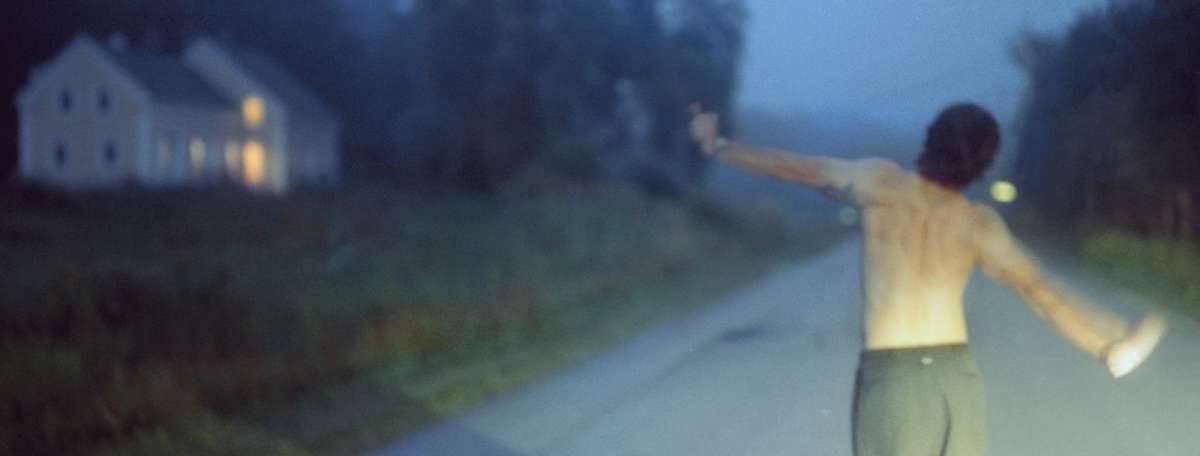
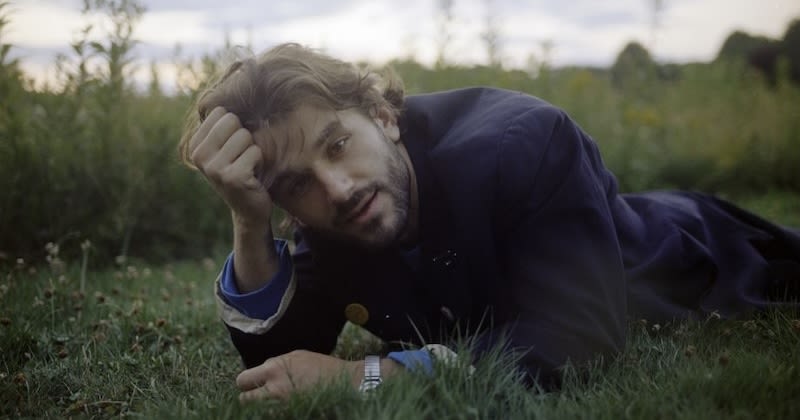
Photo: Olivia Bee
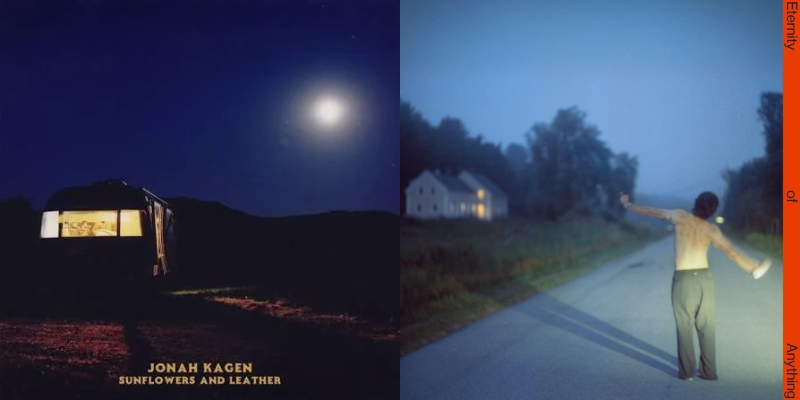
Jonah Kagen isn't particularly interested in making music the easy way. He made his debut album, Sunflowers and Leather, while traveling the country in a rebuilt Airstream. For his second, he did pretty much the opposite.
The Savannah-born, Nashville-based singer-songwriter, best known for his viral hit “God Needs the Devil,” spent months in near-total isolation making Eternity of Anything, out now! He wrote, produced, recorded, engineered, and mixed the entire album himself, digging into some pretty personal territory along the way.
When Jonah stopped by Lucinda’s for a free pop-up show, I got the chance to sit down with him. We talked about why he chose to make such a personal record alone, what success looks like to him, and even a few musical hot takes.
Finding His NYC Footing
Q: You played soccer at Cornell and have played local venues from Mercury Lounge to Bowery Ballroom since then. How well have you gotten to know the city? Any favorite spots or maybe even a hot take? READ / HIDE ANSWER
New York took some getting used to. Jonah remembers being overwhelmed by the pace when he first started visiting, but these days, he’s found a routine. Not necessarily a list of places to go and people to see, but what he calls “the best way to do New York without losing my mind.”
That starts with a little mental preparation before arriving and a reminder not to overthink every interaction: “If somebody doesn’t look at you while you’re walking, it’s gonna be fine. If somebody looks at you while you’re walking, That’s also fine. It’s okay.”
Making Eternity of Anything
Q: You made your first album traveling the country in a trailer, but spent months making Eternity of Anything in near-total isolation. What inspired that switch, and did you have anyone you turned to for a second opinion? READ / HIDE ANSWER
Jonah wanted this album to go somewhere more personal than his first. On Sunflowers and Leather, he went out, experienced things, and wrote about them. This time, he wanted to look inward at what was happening in his own heart and brain. To do that, he needed space to sit with those feelings on his own.
“If I’m with other people or if I’m consulting other people or if there are too many opinions about anything, I just have trouble saying things because I start thinking about what other people are going to think,” he explained.
He largely avoided feedback while making the record, to the point of being “overly precious” about the songs when it came time to share them. Letting other people hear them brought on what he called “a horrible stew of emotions,” with his thoughts spiraling from “everybody’s gonna hate this” to “they hate me” to “I’m a terrible person.”
After spending months alone with these songs, letting other people hear them was a whole different challenge. He was still joking about whether listeners would “throw tomatoes” when the album came out.
But beyond worrying about how people would receive the music, I was curious whether getting those feelings into a song actually helped him leave them behind.
Revisiting Vulnerable Moments
Q: You've spoken about reopening vulnerable moments from your past when writing. Does creating songs about those feelings help you let them go, or do you find yourself back in that headspace whenever you listen to or perform them? READ / HIDE ANSWER
Jonah said writing about painful experiences hasn’t helped him feel better at all, actually. He described that emotional work as “a sacrifice for making something to give away.” Without the chance to share those songs with others, he said, he wouldn’t put himself through the “emotional turmoil.”
Performing those songs can “slingshot” him right back into those emotions, too, but what fills his cup is seeing how listeners connect with them. “Releasing them and watching them become someone else’s, that’s cathartic,” he explained.
That feeling is especially strong live, when he sees people singing along or they come up to him afterward to explain what a song means to them. Those moments are what keep him coming back to the harder parts of songwriting.
At one point, I mentioned I'd been following his music since he released "Barcelona" and how that song had a serious hold on me in 2022. “Sorry to hear that,” he joked, before adding, “I made that song exclusively for college abroad girls.” (Younger me felt very seen.)
After talking about what his music meant to other people, myself included, I wanted to know which moments in his own career had meant the most to him.
What Success Feels Like
Q: When "God Needs the Devil" hit No. 1 at Alternative Radio, did that feel like an "I made it" moment, or have other milestones meant more to you? READ / HIDE ANSWER
The numbers have been exciting, but Jonah describes his career as a slow burn. His versions of an “I made it” moment have happened onstage or just afterward.
One came after a headlining show with his band at Denver’s Bluebird Theater. “It was such an affirmation of not just, like, operationally, we’re making the right choices as a business, but also, with my life,” he explained. “This is what I’m supposed to be doing right now.”
Shortly afterward, he felt it again at Under the Big Sky in Montana, his “favorite festival ever,” where he was amazed by how many people had come out. And now it's official: he'll be returning in 2027!
He’s had “a billion” different “micro moments” like that along the way. One of the most recent came when he returned to a venue in Pioneertown where he’d filmed his second music video almost six years earlier. Only this time, he was headlining a show, performing the very same song he’d filmed there all those years ago.
The experience was “super emotional,” he said. “It was cool to revisit that space and that place as someone with a lot more information than I had prior.”
We covered some pretty personal territory, so I had to end with a few lighter questions. (Although, as someone who takes music taste very seriously, these might have been the most revealing of all.)
Speed Round: the Album & the Playlist
Which song are you most proud of?
"Ain't Convinced," which samples Fred again..
Which song took the longest to get right?
"Don't Feel Right" lyrically (around 20 choruses!) and "Black and White" for mixing.
Which song almost didn't make the album?
"Every Time I Come Around Here." A fan convinced him to add it, and he "folded so fast."
Which songs will be the most fun to perform live?
"Ain't Convinced" and "Better Than You"
What's your favorite song on the album?
"Words From A Wandering Man"
What's one lyric you wish you'd written?
"My heart is like paper, yours is like a flame," from "Such a Simple Thing" by Ray LaMontagne.
What's your favorite cover?
Dave Matthews Band's version of "All Along the Watchtower"
Who might surprise people on your playlist?
Avicii and Fred again..
Ultimate yearning song?
"Lover, You Should've Come Over" by Jeff Buckley.
Listen to Jonah Kagen:
Published October 2026 by Corrie Rubinfeld