Dmitry Baevsky Quartet
Tickets

On sale smallslive.com
About
www.dmitrybaevsky.com
Dmitry Baevsky was born in St. Petersburg, Russia in 1976. He started piano lessons at six and discovered his passion and seriousness for music as a teenager when he picked up an alto saxophone. In 1991, he entered the Mussorgsky College of Music in St-Petersburg and studied with the brilliant Russian jazz saxophonist Gennady Goldstein. Throughout the nineties, Dmitry Baevsky appeared in many jazz venues and international festivals throughout Russia. In addition, he participated and was awarded prize places in several jazz and classical competitions.
Upon his arrival in New York in 1996, he was accepted into the Jazz Department at the New School University on a full scholarship. After finishing college, Baevsky stayed in New York and remained busy working within the local New York jazz community.
In 2005, he released his first CD as a leader “Introducing Dmitry Baevsky” (Lineage Records). The album features such masters as Cedar Walton, Jimmy Cobb and John Webber.
Since then, Baevsky has performed and/or recorded with musicians such as Peter Washington, Willie Jones III, Peter Bernstein, Cedar Walton, Dennis Irwin, Jeremy Pelt, Steve Williams, David Hazeltine, Joe Magnarelli, Ryan Kisor…
In 2009, he recorded “Some Other Spring” (Rideau Rouge / Harmonia Mundi) while on tour in Europe with great guitarist Joe Cohn.
In September 2010, the label Sharp Nine Records released “Down With It”, an album featuring trumpet player Jeremy Pelt as well as Jeb Patton (p), David Wong (b) and Jason Brown (dr). His second release on Sharp Nine Records, called “The Composers”, came out in 2012 and features David Hazeltine on piano, John Webber on bass, Jason Brown on drums and the great guitarist Peter Bernstein on three tracks.
Dmitry is a Selmer and Vandoren endorsing artist.
In recent years Dmitry has appeared in various venues throughout the world, among which are: Rochester International Jazz Festival (USA), Duc des Lombards and Sunside Jazzclub (Paris), Punta Del Este Jazz Festival (Uruguay), Jazz Showcase (Chicago, USA), Marciac Jazz Festival (France), Jamboree Jazz Club (Spain), Brno Jazz Festival (Czech TRepublic), Smoke Jazz Club (NYC), Gouvy Jazz Festival (Belgium), Istanbul Jazz Festival (Turkey) and others.
Described as both a "young phenom" and an "absolute great," Jeb Patton has earned a well-regarded reputation in the international jazz community. The multi-talented Patton is known as a "player of great expression" and "not one to tread the predictable," as well as a "simpatico accompanist" for The Heath Brothers, an "innovative" arranger, and one who "cuts an impressive swath on his composition, 'Hanna's Mood,'" a tribute to his late teacher, Sir Roland Hanna.
Jeb Patton graduated magna cum laude with a Bachelor of Arts and Sciences degree with a major in music from Duke University, where he studied piano with Tibor Szasz, Douglas Buys, and Jane Hawkins. As a member of the Duke Jazz Ensemble under Paul Jeffrey, he performed with and/or arranged for more than 60 professional jazz artists, including 48 musicians from New York and more than 12 international jazz musicians from Italy, Monaco, and Portugal.
Studying under Sir Roland Hanna and Jimmy Heath, Jeb earned his Master of Arts degree, summa cum laude, in 1997 from the Aaron Copland School of Music, Queens College, City University of New York, where he also received the Louis Armstrong Award for composition from the ASCAP Foundation. Since graduating, Jeb has toured throughout the United States and abroad with the Heath Brothers and with Jimmy Heath's Generations Quintet, performing in theaters, festivals, concert halls, colleges, and clubs. Since moving to New York in 1996, Jeb has also played with the Charles McPherson Quartet, the Charles McPherson-Tom Harrell Quintet, Etta Jones, the Faddis/Hampton/Heath Sextet, Winard Harper's group, the Antonio Hart Quintet, Lewis Nash, Sachal Vasandani, Roberta Gambarini, Javon Jackson, James Moody, Diego Urcola, Jeremy Pelt, Keter Betts, Eddie Locke, Marlene Verplank, among others.
Major national and international festival appearances with the Heath Brothers include Savannah Music Festival (2005), New Orleans Jazz and Heritage (2005), Tri C Festival (2005), Newport (Rhode Island, 2004), Mt. Hood (Oregon, 2004), Charlie Parker Festival (NYC 2004, 2002), Atlanta (Georgia, 2004), Baden-Baden Festival (Germany, 2003), 8th Salzburg Jazz Autumn Festival (Austria, 2003), 45th Annual Monterey Jazz Festival (California, 2002), 3rd Annual Healdsburg Jazz Festival (California, 2001), North Sea Jazz Festival (Holland, 2000), ýarhus Jazz Festival (Denmark, 2000), the Pori Festival (Finland, 1999), Graz "Jazz-Sommer" (Switzerland, 1999), and Wiggin Jazz Festival (England, 1999),
Notable New York City performances include appearances with the Heath Brothers in "Birds of a Feather: A Charlie Parker Tribute," at the New Jersey Performing Arts Center, May 21, 2004, (also featuring the Roy Haynes Quintet), and the January 24, 2004, NEA Jazz Masters Award Concert.the Opening Nights of Jazz at Lincoln Center, Jimmy Heath's 75th Birthday Celebration, October 19 and 20, 2001; and Jazz at Lincoln Center, Duo Series with Percy Heath in the Stanley Kaplan Penthouse, February 1 through 3, 2001.
Performances in 2003 included a concert at the Chamber Music Hall in Berlin that was broadcast on Berlin Jazz Radio and a concert series in Rome. In September 2000, Jeb traveled to Greece with the Carnegie Hall Jazz Band under the direction of Jon Faddis and at the invitation of the Consulate General of the USA to perform Ellington's "Black, Brown and Beige Suite." He has also appeared on three S.S. Norway Jazz Cruises as part of the Jimmy Heath Big Band, with Jimmy's small band, and with the Heath Brothers.
Career highlights also include performing with Antonio Hart at the Kennedy Center in October 2003 at the National Visionary Leadership Project Gala and Awards Dinner. As students of Jimmy Heath, the duo performed a medley of all Jimmy Heath compositions in honor of Heath being named a Visionary in the Performing Arts.
Inspired by the late Sir Roland Hanna, Patton is also very involved with classical music. Classical performances include a solo recital at Queensborough Community College featuring the Chopin Ballades and two performances with the New York Philomusica. These concerts featured Ellington's concerto, A New World A-Comin' arranged for chamber ensemble, Haydn Piano Trio in Eb major, and a premiere of a chamber piece by Michael Berkeley. In addition, Patton performed Ellington's concerto with the Queens College Orchestra in honor of Sir Roland Hanna, and has performed extensively with Coleridge-Taylor Perkinson's New Black Music Repertory Ensemble. Patton studied classical piano with Sir Roland Hanna and Lawrence Schubert.
Presently, when Jeb is not on the road with the Heath Brothers, he teaches piano, improvisation, transcription and ear training at Queens College and Five Towns College.
weblinks:
www.jebpatton.com
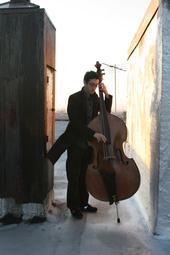
Bassist David Wong was born and raised in New York City. He is a graduate of the LaGuardia High School for Music and Art and the Performing Arts, where he developed his passion for music under the tutelage of tuba master Bob Stewart. In 2004, he graduated from the Juilliard School in classical music. He has studied with Orin O'Brien (New York Philharmonic), Ron Carter, Ben Wolfe, and John Clayton. From 2003 to 2004, as part of the Eric Reed Trio, Mr. Wong performed in Switzerland, Scotland, the Hollywood Bowl (Los Angeles), the Algonquin Hotel (New York City), and with Jazz at Lincoln Center and many other venues worldwide. He is currently a member of Roy Haynes' Fountain of Youth band which has toured throughout the United States, Europe and Japan, as well as bassist with the Heath Brothers quartet, led by jazz legends, Jimmy and Albert "Tootie" Heath. David can also be seen performing with the exciting new singer, Sachal Vasandani, and the amazing pianist, Jeb Patton. He has recorded with Benny Green, Dan Nimmer, Jeb Patton, Albert Tootie Heath, and is featured on a brand new release from Sachal Vasandani, Eyes Wide Open. He has performed with Clark Terry, Illinois Jacquet, Wynton Marsalis, Christian McBride, Walter Blanding, Marcus Printup, Leroy Jenkins, David Hazeltine, Jim Rotondi, Carla Cook, Paula West, and Mark Gould (Metropolitan Opera) to name just a few.
Weblinks:
profile.myspace.com/index.cfm?fuseaction=user.viewprofile&friendID=187491925
Three exemplary recordings from the first decade of the 21st Century, all issued on Marc Edelman's Sharp Nine imprint, are closely tied to two important New York City venues. Alto saxophonist Ian Hendrickson-Smith's Up In Smoke (2003) and Still Smokin' (2004) were recorded live at Smoke Jazz Club (formerly Augie's), an uptown bastion of Hammond B-3 organ combos, jazz-funk bands, as well as an abundance of no-nonsense, straight-ahead sounds. In Orbit (2006), a studio date by Planet Jazz, the sextet founded by the late Johnny Ellis and currently led by pianist Spike Wilner, was nurtured by weekly appearances at Smalls, the legendary, musician-friendly Greenwich Village nightspot.
These recordings are living proof that jazz based on traditional practices continue to sound fresh and vital in an age when the music is stretching in a myriad of directions. The personnel include significant mainstream players who are held in particularly high esteem by their peers: Guitarist Peter Bernstein, trumpeters Joe Magnarelli and Ryan Kisor, tenor saxophonist Grant Stewart, pianists David Hazeltine and Wilner, as well as bassists Barak Mori, Peter Washington, and Neal Miner. Hendrickson-Smith's records contain the enthusiastic blowing that one expects from live recordings, minus the customary excess. In Orbit is mostly dedicated to Ellis's unique, melodically rich compositions which lend themselves to improvisations of short-to-moderate duration.
Aside from unapologetic ties to swing and bebop, the common denominator of all three discs is drummer Joe Strasser. Although you'll search in vain for his name in critic and listener polls, Strasser is a one of a kind stylist. Joe has his own take on jazz drumming, his own sound, says Hendrickson-Smith, who co-founded The Hotpants, a funk band which was a mainstay at Smoke for several years, with Strasser. And that's the true mark of any musician. Spike Wilner regards Strasser as an artist at a very high level; so creative and so thorough. Everything is very meticulous and everything is musical. He's tremendously versatile and traditional in the sense that he's got a real foundation. I know his idol is Jimmy Cobb, then Philly Joe Jones and the classic bebop drummers.
Not unlike any tradition-minded trapster, Strasser's sound starts with the ride cymbal. The second he hits the cymbal, you know who it is, Hendrickson-Smith says. It's really crisp and exact. The cymbal beat contains just enough weight, pushing the band forward without taking up too much space. It drives an easygoing, medium tempo version of I Wish You Love, from Still Smokin', and works well with repetitive tom-tom and rim knock combinations. Tightly cleaving to Barak Mori's walking line, the light yet distinct cymbal is the most prominent part of Strasser's playing behind Hendrickson-Smith's solo on The Best Things in Life Are Free (Up In Smoke). Later on during Hazeltine's turn, he varies the ride cymbal rhythm, shifting into choppier patterns for a couple of bars.
A colorist who is mindful of the effect of each stroke on the band as a whole, Strasser mines the rest of the components of the drum kit with equal parts of efficiency and artistry. The snare drum snaps with authority yet retains a certain lightness. Throughout Ryan Kisor's solo on an up tempo Love For Sale (Still Smokin'), his edgy snare accents push the trumpeter, and he sometimes plays in unison with Hazeltine's chords. The tom-toms are tuned beautifully and often employed on heads and behind soloists, frequently in repetitive patterns that sound out in a bell-like clarity. Improvising second-line funk rhythms on Hendrickson-Smith's Jacob's Crib (Still Smokin'), recurring three and four stroke figures to the mounted tom-tom make a fine contrast to single and buzz strokes to the snare. Strasser uses the bass drum more sparingly, and it impacts in interesting ways, like comping rhythms that would normally be executed on the snare or in acute contrast to brush strokes on ballads. He animates parts of Wilner and Stewart's solos on Buttermoose (In Orbit) with prominent bass drum hits, including one pattern that marches across the pulse. Memories of You (Still Smokin') includes stimulating bass drum beats amidst sensitive brush work behind Hendrickson-Smith's rendition of the melody and Hazeltine's solo.
Both Wilner and Hendrickson-Smith speak enthusiastically about Strasser's rock solid time and his empathetic ways of interacting with other musicians. I love playing fast tempos with Joe, Wilner says. He just burns, but he's never out of control. It's so easy to play with him. He's on everything. You give him a glance and he gives you exactly what you want. Me and Joe have these weird, comping experiences that happen quite a bit, Wilner continues, where I'll comp an idea and he'll comp something elaborate at the same time-those great jazz moments. And it happens a lot. One of those moments occurs during the latter part of Wilner's solo on Ellis's The Squirrel is a Girl (In Orbit) when Strasser intuits one of Wilner's lines and tailors accents to it.
That's a tough tempo to keep rock solid, Hendrickson-Smith says of the slow-to-medium pace of Chelsea Bridge, from Up In Smoke. At the suggestion of David Hazeltine, Strasser played with sticks instead of brushes. Sounding perfectly at ease, his steady, patient ride cymbal leads the way. He adds significant touches, like repetitive eighth note triplets to the mounted tom-tom during Hazeltine's solo, that never get in the way or violate the spirit of Billy Strayhorn's composition. He's a consummate sideman, Hendrickson-Smith adds. Joe's always waiting for you to ask him for something, and never forces the tune in a specific direction. He's got the perfect balance between gut and brains. If somebody gives Joe something to work with, he's all over it. Conversely, Strasser knows when to stay out of the way. For example, he all but disappears during the early stages of Magnarelli's Dual Highway (In Orbit) solo, allowing the trumpeter to explore a floating melodic line without the slightest interference.
Apart from incisive playing on the heads and effective comping strategies, Strasser is a first-rate soloist who stays in close touch with the materials at hand. The thing about Joe Strasser is that his solos are unbelievable; they're really quite unusual, Wilner enthuses. Mommy, Mommy NO! (In Orbit) begins with a brilliant eight bar break. A repeated five note figure executed in unison on the bass drum and cymbal is answered by terse fills. Though the break is grounded in time and indicates a specific tempo, it nonetheless contains a slightly unsettled feel. When the band enters you realize that it's based on the composition's melody. That's stuff Joe came up with, Wilner replies when asked if the break is part of Ellis's chart. It's part of the level of authority that a guy like Joe brings to the table.
A two bar vamp played by Wilner, Bernstein, and Gill provides a foundation for Strasser's extended solo on Hampton Hawes's Sonora (In Orbit). Thickset rhythms to the tom-toms, snare and cymbals are bound up in the simple figure. He approaches the vamp from every conceivable angle, cleaving to some parts and leaving others exposed. In contrast to the rest of the track's fleet swing, Strasser sounds as if he's having a grand time thrashing about in the muck of his own making.
Weblinks:
[email protected]
Lineup